The Questions People Ask About Ferragamo Bags
People ask the same things about Ferragamo bags over and over, and more than a few of those questions have answers that contradict what circulates online. What follows assembles the most common ones and answers each as plainly as the evidence allows. Where something is documented by the company it is stated as fact; where it is only a claim from resale blogs, it is labelled as such. Every price here is an observed 2026 market price taken from the brand’s own US webstore in September 2026, which makes it a snapshot rather than an official price list. The scope is handbags only, so shoes appear once, in the answer explaining how the bag business began. The naming question is the one to read first, because that is where half the confusion starts.
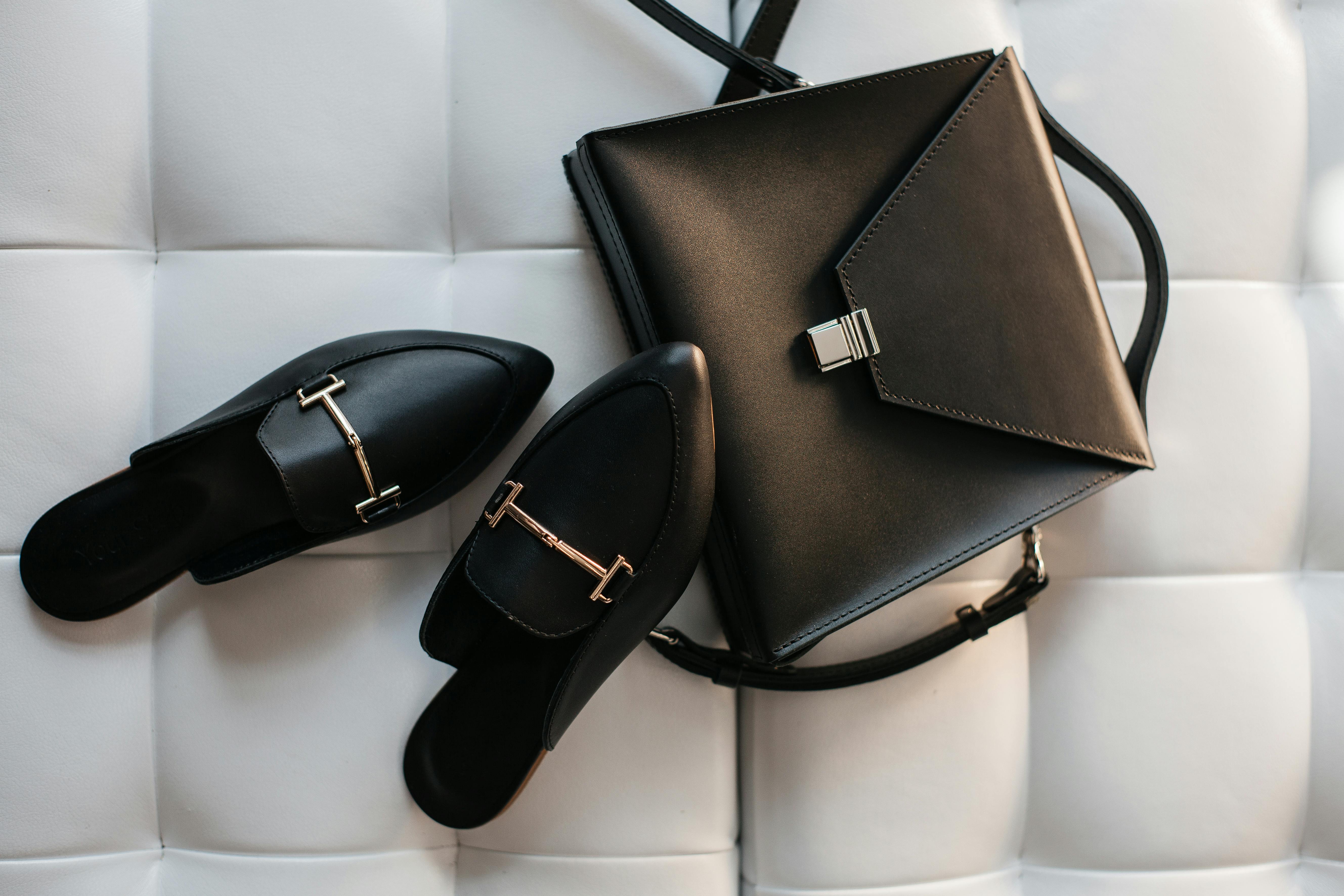
Which is right, Salvatore Ferragamo or Ferragamo?
Both are right, though each names something different, and that is why the confusion will not go away. The brand was renamed simply Ferragamo around 23 September 2022, ahead of the Spring/Summer 2023 show, with a new logo by Peter Saville: a custom serif referencing classical stone inscriptions, replacing the founder’s handwritten script. The legal company, though, remains Salvatore Ferragamo S.p.A., and its own 2026 investor documents carry that name. So the rename covered the mark, not the company, and both names remain live. Resale platforms have not followed the change either, filing everything under Salvatore Ferragamo, which is why searches for salvatore bags return secondary-market listings. Two misspellings are also worth knowing, because feragamo with ferragamo classic shoulder bag one r and ferragammo with a doubled m are common enough that fraudulent sellers target them, advertising a feragamo bag at an impossible price.
At what point did Ferragamo start making bags?
The handbag chapter begins later than most people think. Salvatore Ferragamo founded the house in Florence in 1927 and built it on footwear, the single line of shoe history this page needs. The bag story starts in 1965, when Fiamma Ferragamo began designing handbags and small leather goods as accessories to the shoes. The earliest press article featuring a Ferragamo bag is dated 1969. So the leather-goods business is roughly four decades younger than the company, and it grew inside an established Florentine production culture. That explains much about how the bags are built, since the finishing standards came from the shoe side of the house.
Does the Vara name belong to a bag?
No. This remains the most common factual error in the category. The Vara is a shoe, designed in 1978 by Fiamma Ferragamo, and more than a million pairs of it sold. Footwear icon, yes; handbag line, no, so a listing that describes a Vara handbag is being careless at the very least. The motif does turn up on bags as a borrowed detail, and that is where the confusion begins, since the Ginny, a bowling-style bag carrying the Vara plate, circulates on the secondary market, with a mini version observed at $870. That is a bag borrowing a shoe’s detail, not evidence that the Vara itself is a handbag. When a seller uses the name as if it were a handbag family, read that as a signal about the seller.
Which Ferragamo bag counts as the signature one today?
The Hug, and it is not close. The brand’s own craftsmanship page describes it as its modern accessory icon, and the assortment backs that up, since the name runs across top handles, shoulder bags, crossbodies and East-West shapes rather than one category. The structured version has folding side panels and two golden Gancio buckles fastening the wrap straps, plus a detachable strap. In observed 2026 prices the XS lands at $2,500 to $2,650, the medium from $3,400 and the large from $3,600. Around it sit three names worth knowing: the Gancini hardware family, which holds the entry prices; the Ferragamo Studio Bag, positioned as a standing iconic collection; and the newer Cara, at $3,400 in XS. Completing the picture is the Iconic Top Handle, officially a re-release of one of the house’s best-known styles, offered in wicker and in leather.
What does a Ferragamo bag cost in 2026?
The truthful answer is that the working range is much narrower than the extremes would have you believe. Across the regular assortment, observed pricing in September 2026 stretches from about $830 to roughly $4,800, and a thin exotic tail sits above it. The recognisable pieces, the Hug and its relatives, begin around $2,100 to $2,500, the number most people want. An entry tier built on Gancini hardware sits below, while larger, more materially demanding bags sit above. Exotic skins and special pieces do exist at $7,500, $9,500 and higher, though they are outliers rather than the range itself. The table below summarises the bands with representative models at observed 2026 market prices.
| Band | Representative bags, observed 2026 | What you get for it |
|---|---|---|
| $830 to $1,500 | Double Gancini clutch $880, wallet with chain $890, hobo XS $1,090, mini bag $1,350, multipocket bucket $1,450 | Heritage hardware in small formats |
| $1,650 to $3,500 | Mini tote $1,650, outline tote $1,750 to $1,850, Soft-bag $2,100 to $2,950, Hug XS $2,500 to $2,650, Studio Box XS $2,550 | Where the collection really lives |
| $3,500 to $5,700 | Hug L $3,600 to $3,900, python Gancini $4,100, Iconic Top Handle to $4,800, Mia tote L to $5,700 | Bigger, more structured, harder materials |
| $7,500 and above | Exotic Hug XS $7,500, Iconic Top Handle S $9,500, Studio Box S $24,000 | Exotic skins, plus special pieces |
Does Ferragamo issue serial numbers or authenticity cards?
Nothing the company publishes says so. There is no authentication guide from Ferragamo, and the brand documents no serial-number, date-code or authenticity-card scheme for its bags. Claims found elsewhere, that serial numbers began in the 1980s and should match a card with a holographic number, trace back to resale blogs rather than the brand, so read them as third-party consensus. Every current bag page does show a two-part product code, such as 215975 768853 on the Hug XS, but that identifies model and colour rather than an individual bag. Any seller producing an official authenticity card as proof is pointing to something the brand does not publish, so treat it as a reason for care, not reassurance. What comes closest officially is Repair Services, provided for a selection of authentic products at selected stores with proof of purchase, valid regardless of where the bag was bought.
Is there an official Ferragamo outlet online?
No, and this single fact prevents most scams in the category. Only two official discount arrangements came to light in research: seasonal sale sections on the brand’s own site, and brand-operated stores inside outlet villages. Confirmation for those stores came from The Mall Firenze in Reggello near Florence and more than a dozen Simon Premium Outlets, among them Woodbury Common, Desert Hills, Orlando Vineland and Toronto. The brand’s own store locator, however, labels none of them an outlet, so the correct wording is that Ferragamo operates stores inside outlet villages. Online there is no equivalent, so any site presenting itself as an official Ferragamo outlet is not the brand. The pattern is easy to spot: the name paired with words like outlet or sale, reused official product images, implausible cuts advertised on current-season bags, and no credible company details. A seasonal Ferragamo sale on the brand’s own site is the only official online discount, and the safe alternatives are simple: a Ferragamo shop online, a boutique, or a verified stockist.
Are Ferragamo bags made in Italy?
Yes, and this is one of the few claims you can verify yourself almost instantly. Every current bag product page on the brand’s own webstore carries the origin line Made In ITALY, and the Studio Bag collection page states that each bag in the collection is crafted in Italy. Historically, design and prototyping ran from the Osmannoro factory near Florence from 1967, with production through workshops near Florence and Naples. That structure, a central studio plus specialist workshops, is normal in Italian leather goods, so the label describes a network rather than one building. Beyond that, the company publishes no supplier or tannery details, so anyone offering a longer supply-chain story is inventing it. Origin and authenticity are not the same question, and it is worth remembering that a counterfeit can print those same words with none of the work behind them.
Which Ferragamo bags resell best?
The Hug, clearly and consistently, with everything else some distance behind. On one major resale platform in September 2026, a large suede Hug shoulder bag in excellent condition sat at $2,930 against $4,300 at retail, and a large leather Hug top handle in very good condition was marked from $2,425 to $1,890. Studio and Gancini-hardware pieces cluster at roughly $700 to $1,250, and pre-2020 styles such as Today and Smile Hobo form a floor around $500 to $945. Sofia, Fiamma and Ginny are named as the recognised classics by one platform’s editorial, so what the resale market treats as iconic is not what the boutique does. Among collectors the sense is that the house holds less than the very top tier, a reading the observed numbers support. None of it is investment advice; it is simply what the market was doing on a single day.